
Palos Hills Weeding Services
Choose our expert weeding services for a healthier, more beautiful landscape—our experienced team removes unwanted growth efficiently, ensuring your plants thrive and your yard stays immaculate all season long.
Get a Free QuoteOur Palos Hills Landscaping & Yard Care Services
When to Schedule Weeding in Palos Hills, IL – Seasonal Guide
In Palos Hills, IL, the best times to schedule weeding are typically in early spring and late summer, when local weather patterns and soil conditions are most favorable for effective weed control. The region’s climate, with its cold winters and humid summers, means that weeds often emerge just after the last frost—usually in late March or early April. Targeting weeds at this stage, before they have a chance to establish deep roots, is especially effective in neighborhoods like Hickory Hills and near the Moraine Valley Community College campus, where shaded lawns and varying soil types are common.
Local environmental factors such as the risk of late spring frosts, periods of summer drought, and the heavy clay soils found in areas around the Palos Hills Forest Preserves all play a role in determining the optimal weeding schedule. Properties with dense tree coverage or those near Stony Creek may experience higher humidity and shade, which can encourage certain weed species. Additionally, it’s important to stay informed about any municipal restrictions or seasonal guidelines by checking resources like the Palos Hills' Official Website.
Local Factors to Consider for Weeding in Palos Hills
- Proximity to wooded areas or forest preserves (increased shade and leaf litter)
- Soil type (clay-heavy soils retain moisture, affecting weed growth)
- Average last frost date (late March to early April)
- Summer drought risk and irrigation practices
- Tree density and canopy coverage
- Terrain slope and drainage patterns
- Local precipitation trends
- Municipal restrictions or seasonal guidelines
Benefits of Weeding in Palos Hills
Enhanced Curb Appeal
Healthier Plant Growth
Reduced Pest Infestation
Improved Soil Quality
Professional and Reliable Service
Time and Effort Savings
Palos Hills Weeding Types

Hand Weeding
-
Mechanical Weeding
-
Mulching for Weed Control
-
Pre-Emergent Herbicide Application
-
Post-Emergent Herbicide Application
-
Flame Weeding
-
Organic Weed Management
Our Weeding Process
Site Evaluation
Weed Identification
Targeted Removal
Soil Treatment
Final Inspection
Why Choose Palos Hills Landscape Services
-
Palos Hills Homeowners Trust Us
-
Expert Lawn Maintenance
-
Reliable Seasonal Cleanup
-
Competitive Pricing
-
Professional Team
-
Satisfaction Guarantee
-
Personalized Service
Contact Palos Hills's Department of Public Works for Weed Debris Disposal & Municipal Composting Programs
Proper weed debris management in Palos Hills is essential for environmental protection and regulatory compliance. The city requires residents and contractors to sort weed debris into specialized categories: healthy weeds (suitable for municipal composting), invasive species (such as buckthorn, garlic mustard, and honeysuckle, which must be bagged and sent to landfill), diseased plants (requiring quarantine and controlled disposal), seedy weeds (to be contained and removed before seed set), and soil clods or rocks (to be coordinated with composting facilities or transfer sites). Yard waste collection is seasonal, with biodegradable paper bags only—no plastic permitted. Woody weeds must be bundled in 4-foot lengths, not exceeding 50 pounds. Composting facilities have specific operating hours, permit requirements, and may charge fees. Finished compost is available for soil improvement and restoration projects, with seasonal distribution schedules. Strictly prohibited is the disposal of any weed debris in streets, gutters, or storm drains, as this can result in MS4 violations and water quality impacts. For detailed guidance, contact:
Palos Hills Department of Public Works
10335 S. Roberts Road, Palos Hills, IL 60465
Phone: (708) 598-3400
Official Website: Palos Hills Department of Public Works
Professional Weed Identification & Integrated Weed Management Assessment for Palos Hills's Prairie Till Plains
Effective weed management in Palos Hills begins with professional identification using taxonomic keys and scientific nomenclature, ensuring accurate control strategies. Common weeds in the area include annuals like crabgrass, chickweed, lamb's quarters, purslane, and foxtail; perennials such as dandelions, plantain, violets, ground ivy, and white clover; grassy weeds like quackgrass, goosegrass, and nutsedge; and invasive species including garlic mustard, buckthorn, and honeysuckle seedlings. Site assessments should utilize USDA Web Soil Survey data to evaluate prairie soils with high clay content, moisture, fertility, and sun/shade patterns. Coordination with University of Illinois Extension diagnostic services is recommended. Integrated Weed Management (IWM) thresholds consider both economic and aesthetic injury levels, as well as beneficial weed functions such as nitrogen fixation by clover and pollinator support from dandelions, with timing tailored for maximum effectiveness.
Illinois Environmental Protection Agency Requirements for Weed Control & Water Quality Protection
Weed control activities in Palos Hills must comply with Illinois Environmental Protection Agency requirements to protect water quality in local streams, rivers, and wetlands. This includes establishing buffer zones near water bodies, preventing chemical runoff, and adhering to the Illinois Nutrient Loss Reduction Strategy. Groundwater protection is critical near municipal wells and water supply areas, while surface water must be shielded from runoff. Selective timing and species-specific control help protect beneficial insects and pollinators. Habitat value assessments ensure that weedy areas providing wildlife food and shelter are managed with conservation in mind, supporting Palos Hills's biodiversity goals. Erosion control measures, such as immediate revegetation and temporary stabilization, are required during and after treatment, in coordination with municipal stormwater management programs.
Illinois Pesticide Regulations & Professional Licensing Requirements for Chemical Applications
All chemical weed control in Palos Hills must be performed by professionals licensed under the Illinois Department of Agriculture's Category 3A Turf & Landscape program. Applicators must pass certification exams covering weed biology and IPM principles, and maintain continuing education units (typically 10 CEUs per 3-year cycle). Federal EPA registration compliance is mandatory, including restricted use pesticide (RUP) handling, storage protocols, and integrated pest management plan documentation. Commercial applicators must carry a minimum of $1 million in general liability insurance, with $2 million aggregate recommended, and environmental impairment liability coverage. Comprehensive record-keeping is required, documenting application dates, weather, product rates, target species, and monitoring results, with adverse incidents reported to the Illinois Department of Agriculture. For more information, contact:
Illinois Department of Agriculture
801 E. Sangamon Ave., Springfield, IL 62702
Phone: (217) 782-2172
Official Website: Illinois Department of Agriculture
Integrated Weed Management Strategies: Cultural, Manual & Mechanical Controls in Palos Hills
Integrated Weed Management (IWM) in Palos Hills prioritizes manual and mechanical methods before considering chemical controls. Key strategies include:
- Cultural Controls: Maintain mowing heights of 3-4 inches, apply balanced fertilization based on soil tests, irrigate to support desirable plants, perform core aeration to reduce compaction, overseed with competitive grasses, ensure proper plant spacing, and mulch 2-4 inches deep (maintaining 6-inch clearance from stems).
- Manual Controls: Hand-weed during optimal soil moisture, cultivate for seedbed preparation, use hoeing and hand-pulling, and apply flame weeding in gravel paths.
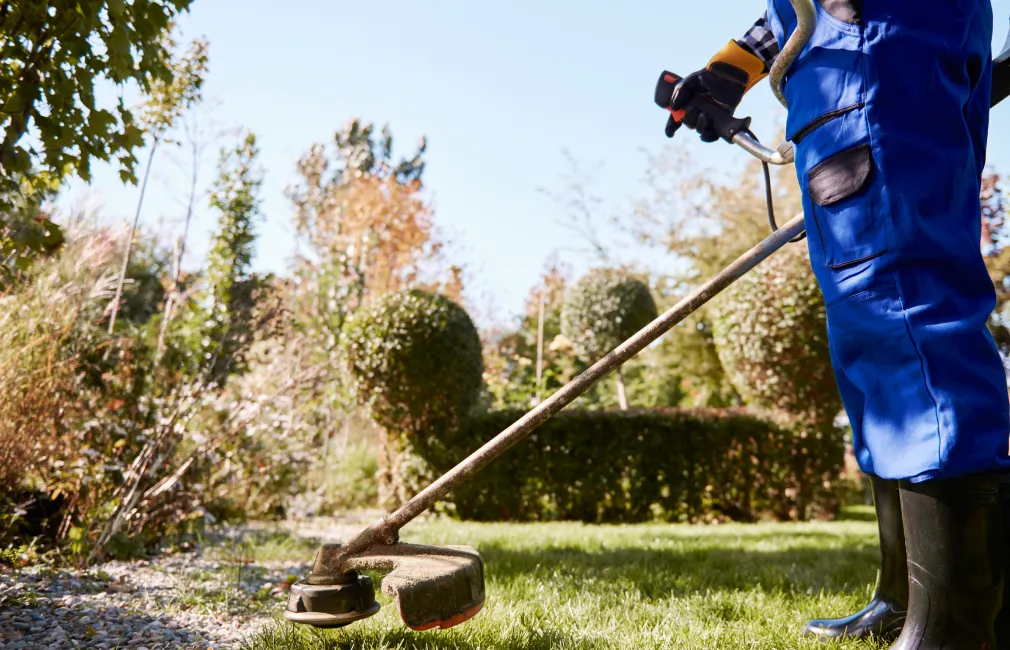
- Mechanical Controls: Use string trimmers with debris containment, solarize beds with clear plastic, install landscape fabric barriers, and employ mechanical cultivation.
- Biological Controls: Encourage natural predators, plant dense groundcovers, use allelopathic species like tall fescue, and coordinate with biological control research.
- Chemical Controls: Apply selective herbicides only as a last resort, prioritize spot treatments, select organic or low-impact products, and rotate modes of action to prevent resistance.
- Prevention: Deep mulching, early detection, proper site preparation, soil health improvement, and site-appropriate plant selection are essential for long-term weed suppression.
Seasonal Weeding Calendar & Weather Timing for Palos Hills's Climate Zone 5b
Palos Hills, located in USDA Hardiness Zone 5b, experiences distinct seasonal patterns that influence weed management. Early spring (March-April) is ideal for pre-emergent control and early perennial treatment when soil temperatures reach 50-55°F, as reported by the National Weather Service Chicago. Late spring (May-June) targets post-emergent annuals during active growth. Summer (July-August) focuses on perennial control and spot treatments, while fall (September-October) is optimal for deep-rooted perennial management. Weather coordination is crucial: soil should be slightly moist for manual removal, chemical applications are most effective at 60-85°F, and wind speeds must be under 10 mph. Avoid treatments during pollinator activity and nesting periods (March-August), and always remove weeds before seed set to prevent spread.
Post-Weeding Site Management & Stormwater Protection in Compliance with Palos Hills's MS4 Program
After weeding, immediate site stabilization is required to comply with Palos Hills's MS4 permit under the Clean Water Act and EPA NPDES requirements. Bare areas must be revegetated within 24-48 hours using appropriate seed mixtures, and mulched 2-4 inches deep for erosion control and moisture retention. Temporary barriers such as silt fences or straw wattles may be necessary during vulnerable periods. Long-term management includes adding 1-3 inches of compost, establishing competitive plant communities, and monitoring for weed resurgence with 30-day and seasonal inspections. Best management practices require immediate cleanup of debris from impervious surfaces, proper material staging, and coordination with municipal street sweeping. For water quality concerns, contact:
Palos Hills Water Department
10335 S. Roberts Road, Palos Hills, IL 60465
Phone: (708) 598-3400
Official Website: Palos Hills Water Department
Invasive Species Management & Specialized Disposal Requirements Under Illinois Regulations
Palos Hills faces significant challenges from invasive species such as garlic mustard (Alliaria petiolata), buckthorn (Rhamnus cathartica), bush honeysuckle (Lonicera spp.), Japanese honeysuckle (Lonicera japonica), and purple loosestrife (Lythrum salicaria). Removal protocols require timing before seed set, mechanical techniques (pulling, cutting, digging), and strict tool sanitation using 70% isopropyl alcohol or 10% bleach solution. Invasive debris must be bagged in heavy-duty plastic and sent to certified landfills—never composted. Transportation must prevent seed dispersal, and follow-up monitoring is required at 6-month and annual intervals. Coordination with Illinois Department of Natural Resources and municipal tracking databases ensures regulatory compliance and rapid response to regrowth.
Tool Sanitation, Worker Safety & Public Health Protection Protocols
Comprehensive tool sanitation is vital to prevent the spread of pathogens and invasive species. Tools must be disinfected between sites and plants using 70% isopropyl alcohol or a 10% bleach solution (1:9 ratio). Workers are required to wear PPE, including safety glasses, Level A4 cut-resistant gloves, steel-toed boots, and long sleeves for poison ivy protection. First aid certification, tick awareness, and heat stress prevention protocols are mandatory. Public health is protected by scheduling work to avoid exposure to children and pets, using barriers, and following emergency procedures for exposure incidents. Ergonomic practices—proper lifting, tool selection, activity rotation, and hydration—are essential for worker safety. For health guidance, contact:
Palos Hills Health Department
10335 S. Roberts Road, Palos Hills, IL 60465
Phone: (708) 598-3400
Official Website: Cook County Department of Public Health
What Neighborhoods Do We Serve Throughout Palos Hills, IL?
Palos Hills encompasses diverse neighborhoods, each with unique weeding challenges:
- Green Valley: High clay soils and poor drainage increase weed pressure; proximity to wetlands requires strict MS4 compliance and buffer zones.
- Heritage Estates: Mature landscaping and narrow alleys limit equipment access; HOA standards demand high aesthetic maintenance and organic treatment preferences.
- Canyon Creek: Shaded areas and compacted soils from foot traffic favor ground ivy and violets; close to water quality protection zones.
- Moraine Valley: Open sun exposure and prairie soils support annual weeds; conservation restrictions apply due to rare species habitat.
- Oak Ridge: Frequent vehicle traffic causes compaction; infrastructure requires coordination for utility conflicts and parking restrictions.
- Hidden Meadows: High maintenance history but sensitive to pollinator protection; notification required near schools and parks.
- Palos Commons: Mixed-use area with traffic control needs, permit procedures, and monitoring obligations for commercial applications.
Palos Hills Municipal Ordinances for Weeding Equipment Operation & Commercial Service Standards
Palos Hills regulates weeding equipment operation to minimize community disruption and ensure safety. Permitted hours are typically 7:00 AM–8:00 PM on weekdays and 9:00 AM–6:00 PM on weekends, with noise restrictions enforced. Commercial operators must obtain a business license, register as contractors, and maintain at least $1 million in liability insurance, workers' compensation, and environmental impairment coverage. Bonding is required for municipal contracts, and all applicators must hold valid Illinois Department of Agriculture Category 3A certification. Safety protocols include traffic control, equipment maintenance, public notification, and right-of-way permit coordination. Environmental compliance mandates proper material handling, vehicle maintenance, immediate cleanup, and documentation, in accordance with Illinois EPA and local ordinances. For regulatory questions, contact:
Palos Hills Community Development Department
10335 S. Roberts Road, Palos Hills, IL 60465
Phone: (708) 598-3400
Official Website: Palos Hills Building Department
By following these integrated weed management principles, regulatory requirements, and environmental stewardship practices, Palos Hills residents and professionals can protect public health, preserve local ecosystems, and maintain sustainable landscapes for the entire community.